
Through this mobile application, the handset will be used for authenticating biometrics of customers making Aadhaar enabled payment.

The practice -- known as the 'done-trade' business in Pakistan and involving the transfer of small quantities of items like nuts, cigarettes, betel leaves, sarees and cosmetics -- has been hit hard by a drop in the number of travellers between the two countries. Many involved in 'done-trade' business at Karachi's Bombay Bazaar have either switched to other businesses or started selling 'jainamaz' (prayer cloth) and other religious items.

After individuals, now even institutions like government departments, schools and companies would get unique identification numbers (UIDs) to enroll the country's residents for the UID system.
After individuals, now even institutions like government departments, schools and companies would get unique identification numbers (UIDs) to enroll the country's residents for the UID system. These institutions or service delivery organisations would get a UID-like identifier, called Entity ID, which would help enrol people and deliver services.

India should convert the Trump threat to an India opportunity, re-embracing a more liberal trade regime as a way of reviving manufacturing output and exports.

Tokenisation acts as an additional layer of security as it masks sensitive card data such as the 16-digit account number, expiry date and security code. However, the security level of the app and the customer's mobile itself also needs to be taken into consideration, say experts. Nikhat Hetavkar explains the whole idea of tokenisation, how it is enabled, its impact on card transactions and related security guidelines.

'Mumbai main branch (SBI headquarter) has all the data ready-made. It doesn't take even an hour to out the data from the system.'

The government in Budget 2017 has already mandated seeding of Aadhaar number with Permanent Account Number to avoid individuals using multiple PANs to evade taxes.

The project is expected to be activated by the end of this month.

An all-out war has been raging on Twitter since Saturday after Trai chief R S Sharma shared his Aadhaar number publicly, challenging anyone to show how mere knowledge of the number can be misused to harm him. While some claimed to have got access to his bank account number and email, Sharma refuted the claims saying they were untrue.

Brokerages have maintained their ratings and target prices on FSN E-Commerce Ventures, the parent company of Nykaa, after the fashion and beauty online retailer posted in-line numbers during the October-December quarter (Q3) of financial year 2023-24 (FY24). They have, however, cut earnings before interest, tax, depreciation, and amortisation (Ebitda) estimates after weak demand weighed across line items in Q3. "While revenue growth was healthy at 22 per cent year-on-year (Y-o-Y), gross margins declined 90 basis points (bps), weighed by higher discounting in own brands and lower ad income.
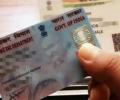
The Bombay high court has passed an ex-parte interim order restraining several entities from operating websites etc claiming to provide PAN card services on behalf of the government-owned UTI Infrastructure Technology and Services Limited (UTIITSL) and noted such an act poses a "national level threat". A single bench of Justice Bharati Dangre, in its order of January 12, said the Union government has made it mandatory for PAN card holders to link the same to their Aadhar Card, which is an acceptable proof of identification. Therefore, any potential misuse of the licence/ authorization to issue PAN cards would be highly detrimental not only to the interest of the company but also to national interest, the HC said.

A remarkable story which helped in transforming a bureaucratic organization, to a customer centric organization. This experience may inspire several government / private organizations to modify or adopt digitisation to transform their business, notes Professor N Ravichandran (retd).

National Stock Exchange (NSE) chief Ashishkumar Chauhan on Friday cautioned retail investors against trading in derivatives and suggested them to invest in equities through mutual fund route. He emphasized that trading in Futures & Options (F&O) derivatives should be limited to informed investors who can manage risk and comprehend the market. Recently, Finance Minister Nirmala Sitharaman and chief economic advisor V Anantha Nageswaran flagged the growing risk of F&O trading for retail investors.

Personal income tax as a percentage of GDP has gone up from 2.11 per cent in 2014-15 to 2.94 per cent in 2021-22 fiscal, indicating that taxpayer base is widening as a result of the steps taken by the present government led by Prime Minister Narendra Modi.

Since payment alternatives such as UPI, e-wallets and USSD - based mobile banking through different platforms are directly or indirectly linked to the user's bank account one needs to be extra careful to keep hackers at bay, explains Adhil Shetty, CEO, BankBazaar.

As part of the scrutiny, I-T department will initially issue 700,000 letters to those who have indulged in such transactions

A new schedule has been added to report income from cryptocurrencies and other Virtual Digital Assets.

UID project was launched by the UPA government in 2009.

As a result, the deadline for filing June quarter results ends on August 15. However, only 1,538 companies out of the 4,000-odd listed firms managed to declare their results within the usual deadline.

'The focus needs to shift towards the ability to collect payments, particularly in tier-3 to tier-4 areas where acceptance is still lacking.'

Modi's high praise of Russia as an ally and Putin's leadership came amid ongoing efforts by the Western world to isolate the Russian leader over the war in Ukraine.

Since the first Aadhaar number was issued in September 2010, more than 1.33 billion Aadhaar cards have been generated till June 2022. With the Aadhaar enrolment of adult Indians nearing 100 per cent, the main objective of the Unique Identity Authority of India (UIDAI), which was to give Unique Identification numbers (UID) to all residents of India, is almost achieved, said a senior government official. "Enrolment will now be much more update-based, because people keep updating their mobile numbers and addresses.

The second leg of the budget session is virtually heading towards a complete washout.

The Reserve Bank of India (RBI) on Friday extended the card-on-file (CoF) tokenisation deadline by three months to September 30, 2022, in view of various representations received from industry bodies. Card-on-file, or CoF, refers to card information stored by payment gateway and merchants to process future transactions. Tokenisation is the process of replacing actual card details with a unique alternate code called 'Token' - thereby enabling more secure transactions.

Don't recharge your phone at public outlets -- carry a power bank instead. Avoid clicking on links sent by 'friends'. If you get into an online sexual encounter with a stranger and get blackmailed, refuse to pay up.

Nearly 665 million Indians or 45 per cent of the rural population did not have access to the internet as of 2023. Difficulty in understanding internet procedures, insufficient awareness of its benefits, and a lack of interest have emerged as the top reasons for a gap in internet penetration in rural India, according to a joint report by the Internet and Mobile Association of India (IAMAI) and Kantar. "The proficiency of English in rural India is very low. While we have content in Hindi, the internet is English-heavy.
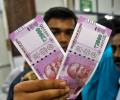
Amazon customers can now use their Rs 2,000 notes to top up their Amazon Pay balances during cash-on-delivery orders, as it offers a doorstep solution to ease the stress of exchanging such currency. Customers can deposit cash of up to Rs 50,000 per month, including notes of Rs 2,000 denomination, Amazon said. The cash load at doorstep service by Amazon Pay is helping consumers convert high-value notes for digital transactions.
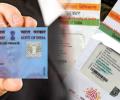
The Income Tax department Saturday issued an advisory that those permanent account numbers (PAN) which are not linked with Aadhaar by the end of March next year will be rendered "inoperative". "What is mandatory, is necessary. Don't delay, link it today!" the department said in a public advisory. "As per Income-tax Act, 1961, it is mandatory for all PAN holders, who do not fall under the exempt category, to link their PAN with Aadhaar before 31.3.2023. From 1.04.2023, the unlinked PAN shall become inoperative," it said.

The Reserve Bank of India (RBI) recently said no entity in the card transaction or payment chain, apart from the card issuers and card networks, will be allowed to store sensitive user data from January 1, 2022. Instead, in transactions card data will be converted to tokens.

The Unique Identification Authority of India (UIDAI) is looking to collaborate with foreign countries and international organisations to build digital identity systems across the world, a top official said on Friday. UIDAI CEO Saurabh Garg during a panel discussion with Paytm founder Vijay Shekhar Sharma at the Infinity Forum said the authority is also exploring emerging technology to enhance security and increase the number of transactions that can be done by using Aadhaar. "We think going forward we will be happy to collaborate with other nations...We would like to collaborate with international organisations also in building international institutions for standards for national identity.

The growth in personal loans for fintech major Paytm may remain muted in the future and not replicate a three-digit year-on-year (Y-o-Y) growth that it recorded in the previous years, a person familiar with the matter said. Sources said the personal loans book may grow in the range of 30 to 40 per cent Y-o-Y on its current base. On a quarter-on-quarter (Q-o-Q) basis, the number of personal loans the Noida-based fintech company disbursed has dropped 20 per cent from 0.3 million in the first quarter of this financial year (Q1FY24) to 0.24 million in Q2FY24, according to regulatory filings.

Despite the demonetisation of 2016 and the rise in digital transactions that followed, the economy's dependence on cash has remained as high as ever. So when the Reserve Bank of India (RBI) introduced a pilot project of its version of digital cash - called the central bank digital currency (CBDC) - on December 1, many questions were asked. Can the CBDC replace physical cash, even partially? Can it match cash in terms of convenience? Are CBDC transactions truly anonymous?

The Reserve Bank of India (RBI) on Thursday extended the card-on-file (CoF) tokenisation deadline by six months to June 30, 2022, in view of various representations received from industry bodies. Card-on-file, or CoF, refers to card information stored by payment gateway and merchants to process future transactions. The earlier deadline was December 31, 2021. "In light of various representations received in this regard, we advise...the timeline for storing of CoF data is extended by six months, ie., till June 30, 2022 and post this, such data shall be purged," RBI said in a notification addressed to all payment system providers and payment system participants.

'Just the amount of work which is there just to become more and more successful in banking. For this to happen you need to have leaders who understand technology.'

While the tax treatment does legitimise past crypto transactions, there is a possibility that any, or all, private cryptocurrencies will be banned in future.
In a bid to ensure security of card data, the Reserve Bank of India (RBI) has enhanced the scope of tokenisation and permitted card issuers to act as token service providers (TSP). Under tokenisation services, a unique alternate code is generated to facilitate transactions through cards. The RBI on Tuesday extended the device-based tokenisation to card-on-file tokenisation (CoFT) services, a move that will bar the merchants from storing actual card data. Card-on-file refers to card information stored by payment gateway and merchants to process future transactions.

The hack may have been done by a rogue Twitter employee, or it may have been a smart hack into the Twitter system, or a social hack where someone conned Twitter's employees into giving them access,' suspects Devangshu Datta.

'We are working with a few housing finance companies to drive affordable lending because that's where we believe our sweet spot is.'
Some of the celebrities whose names and details were used by the fraudsters are Abhishek Bachchan, Shilpa Shetty, Madhuri Dixit, Emraan Hashmi and Mahendra Singh Dhoni, Deputy Commissioner of Police (DCP) of Shahadra Rohit Meena said.
